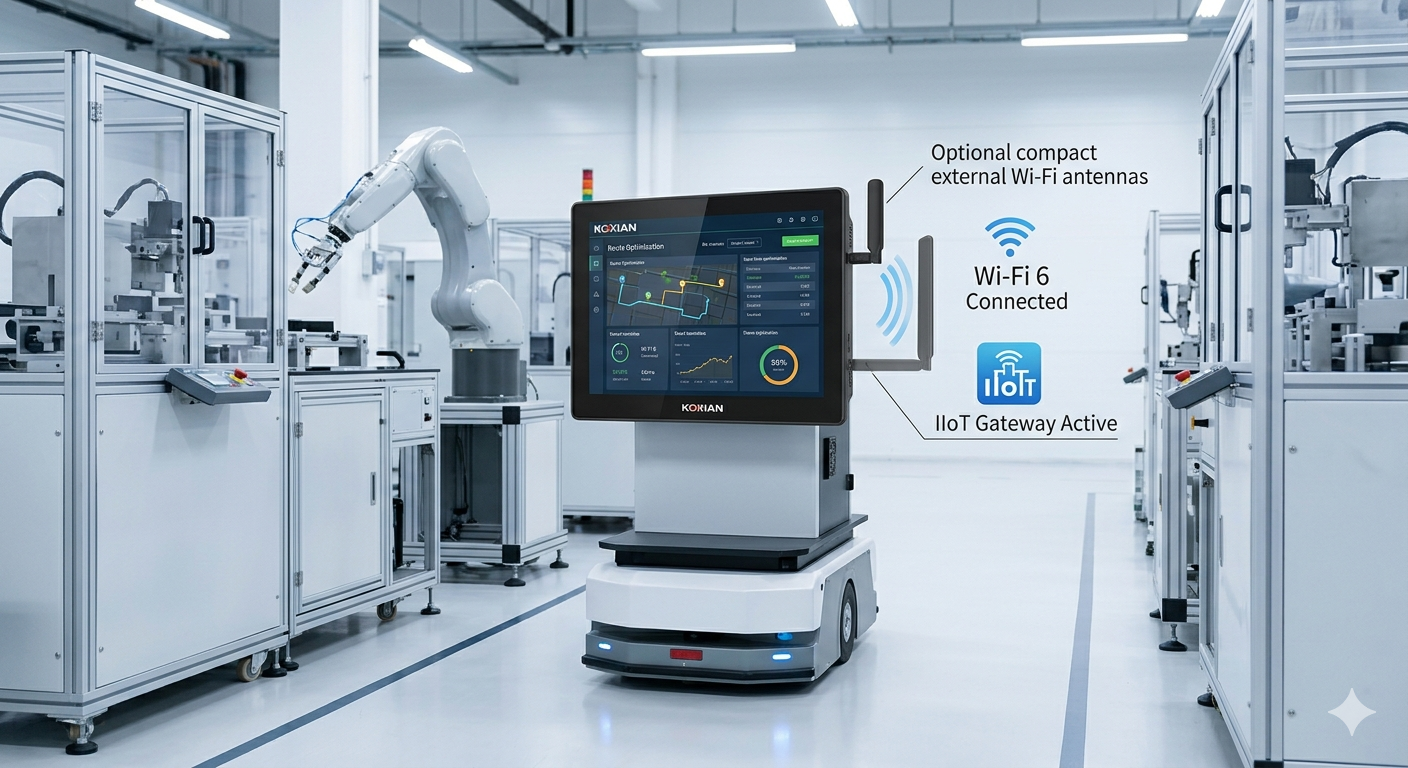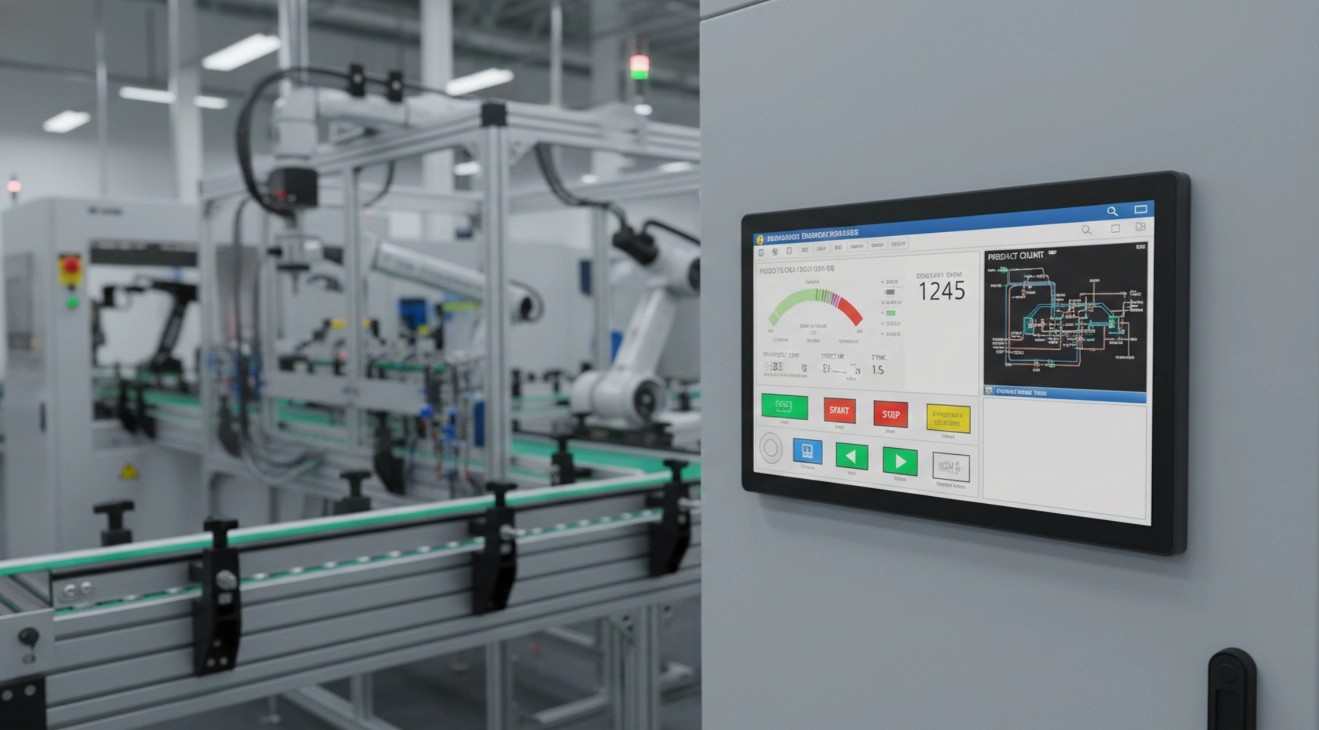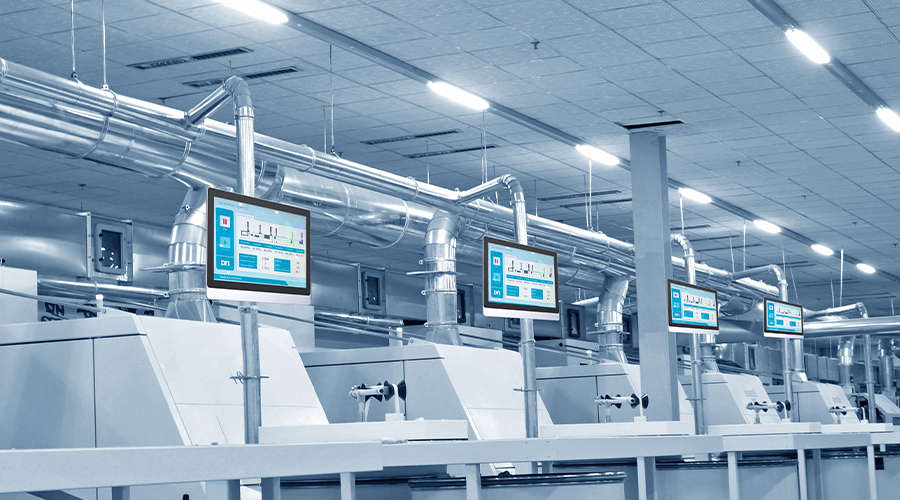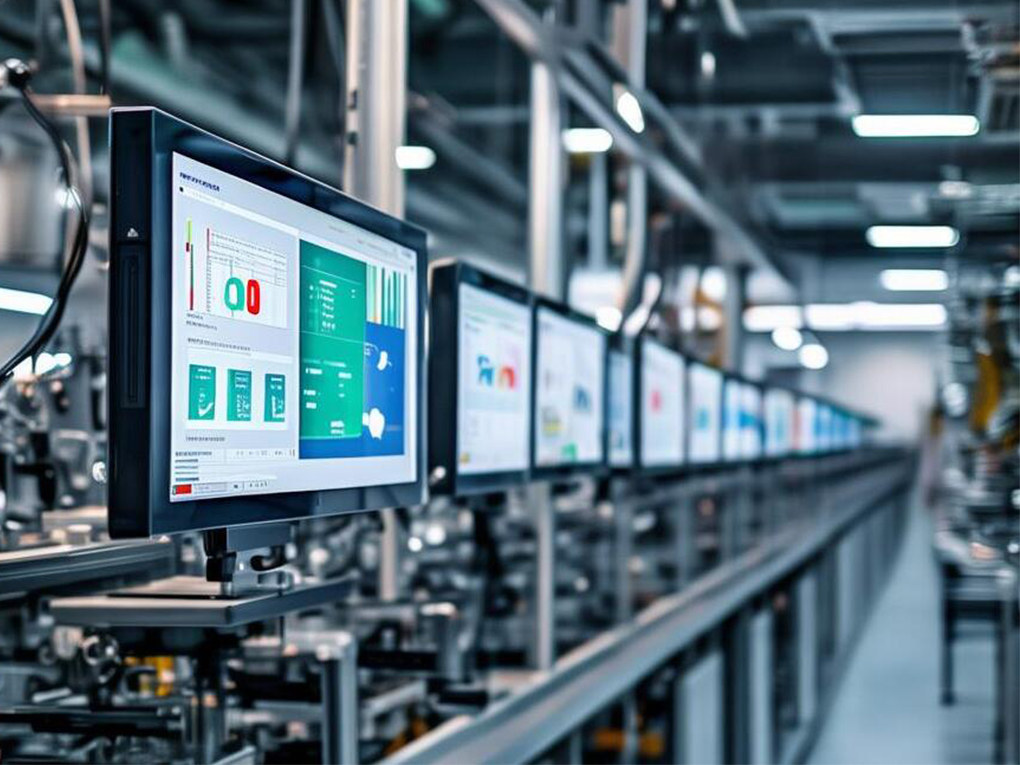
In industrial automation, display visibility is a critical safety requirement, not a luxury. Whether a terminal operates in a dimly lit warehouse or under direct mid-day sun, the screen’s brightness—measured in nits—determines if an operator can make split-second decisions without error or eye strain.
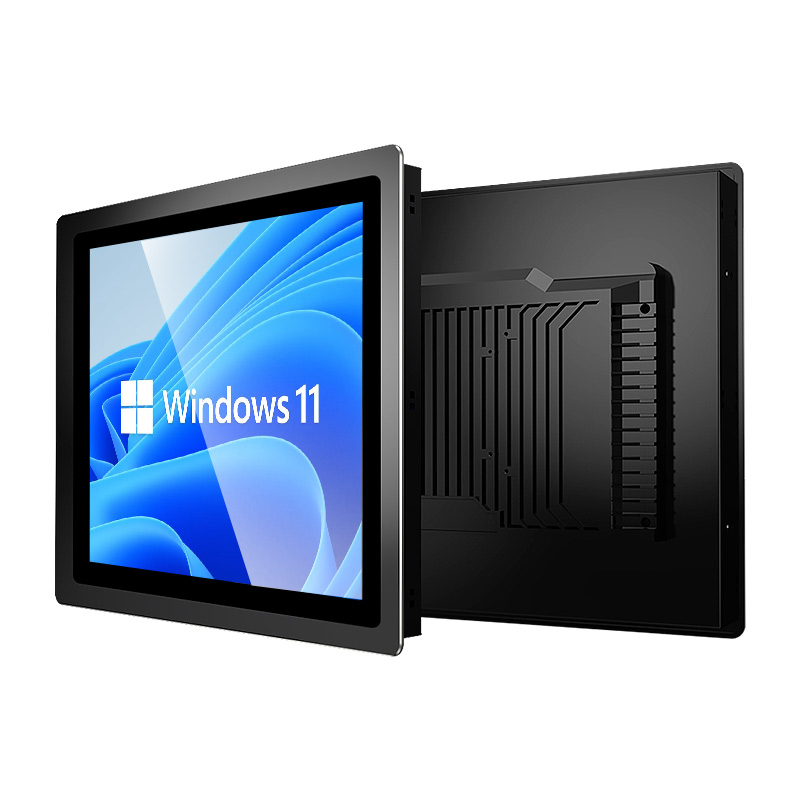
Indoor Environments: The 250–400 Nits Standard
For standard factory floors with controlled overhead lighting, a brightness range of 250 to 400 nits is typically sufficient. In these settings, the primary challenge is not sheer power, but managing reflections. Anti-glare (AG) coatings are essential here to diffuse industrial light interference, ensuring that HMI data remains sharp and readable from various viewing angles.
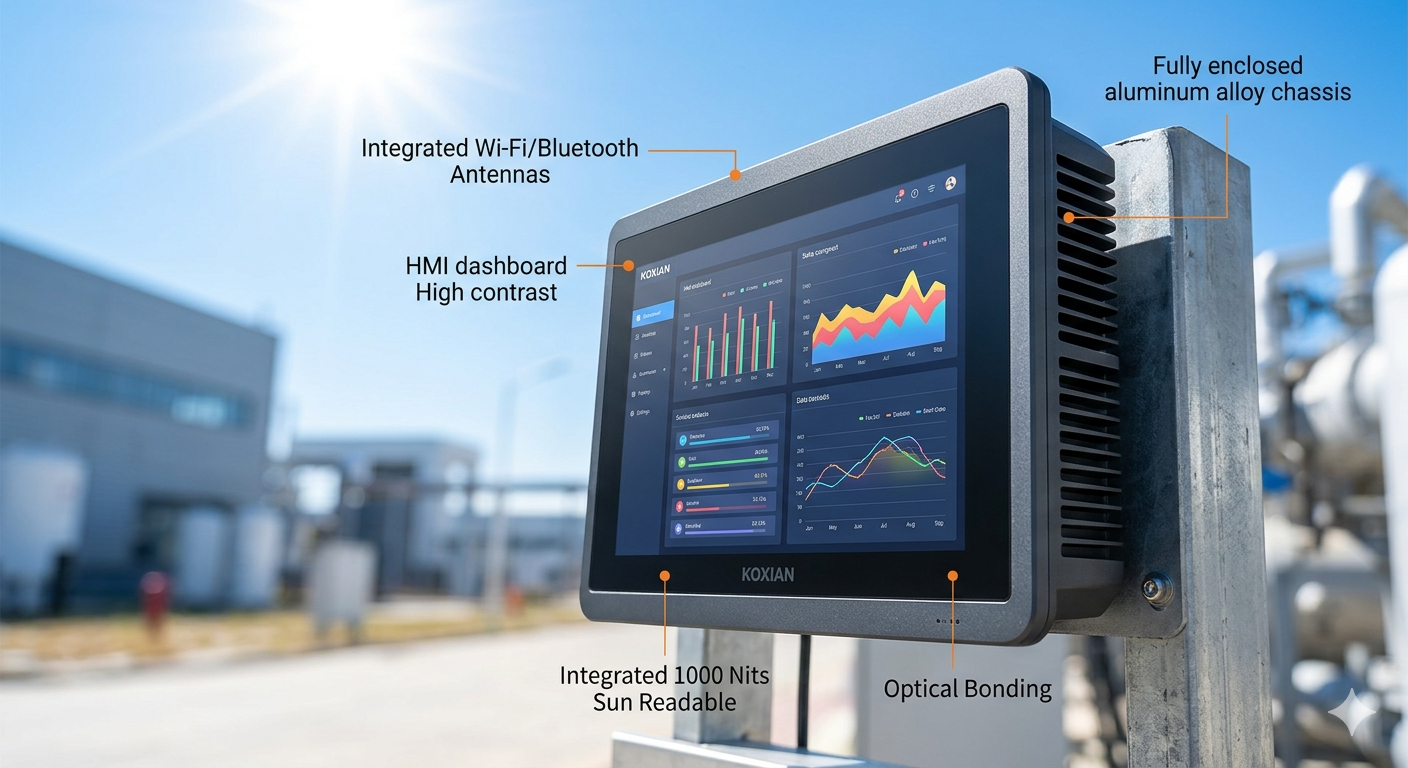
High-Ambient and Outdoor Light: The 1,000+ Nits Threshold
Once a device moves outdoors or near large windows, standard screens wash out. Achieving “Sunlight Readability” requires a specialized display of 1,000 nits or more. This level of luminance often relies on optical bonding—a process that eliminates the air gap between the touch glass and the LCD—to drastically reduce internal reflections and boost contrast in high-ambient light.
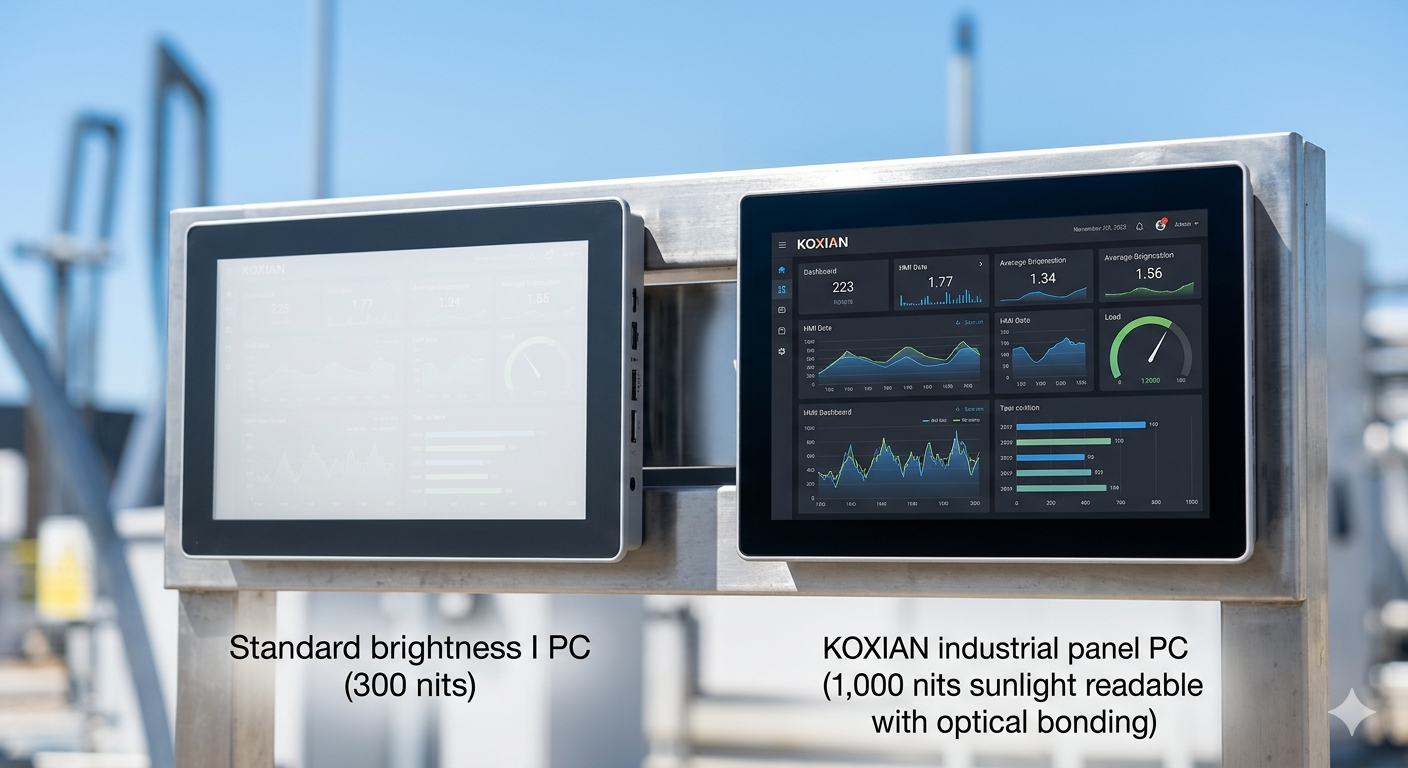
Engineering for Thermal Stability
High-brightness backlights generate significant internal heat, which can degrade an LCD over time if not managed correctly. KOXIAN addresses this thermal challenge by integrating high-nit displays into a fanless aluminum chassis. This design allows the entire housing to act as a heat sink, maintaining consistent 1,000+ nit performance during 24/7 outdoor operation without the risk of overheating or screen dimming.
Conclusion: Matching Nits to the Environment
Selecting the correct brightness level is vital for long-term system reliability. By analyzing your ambient light conditions and choosing a purpose-built industrial PC, you ensure your HMI remains a reliable window into your production data, regardless of the environment.