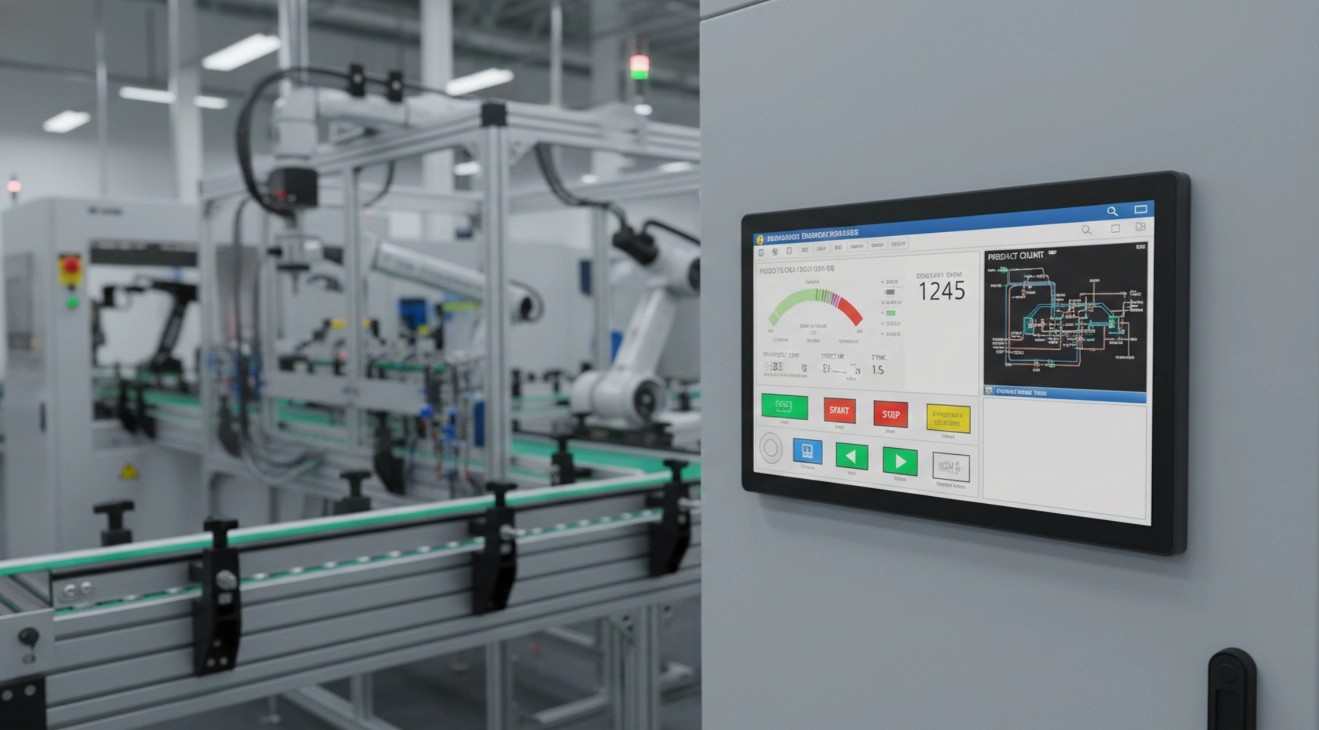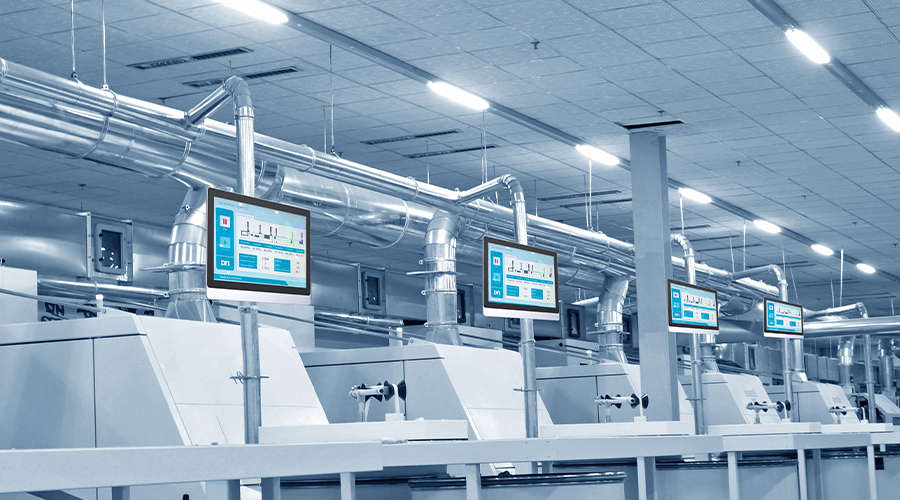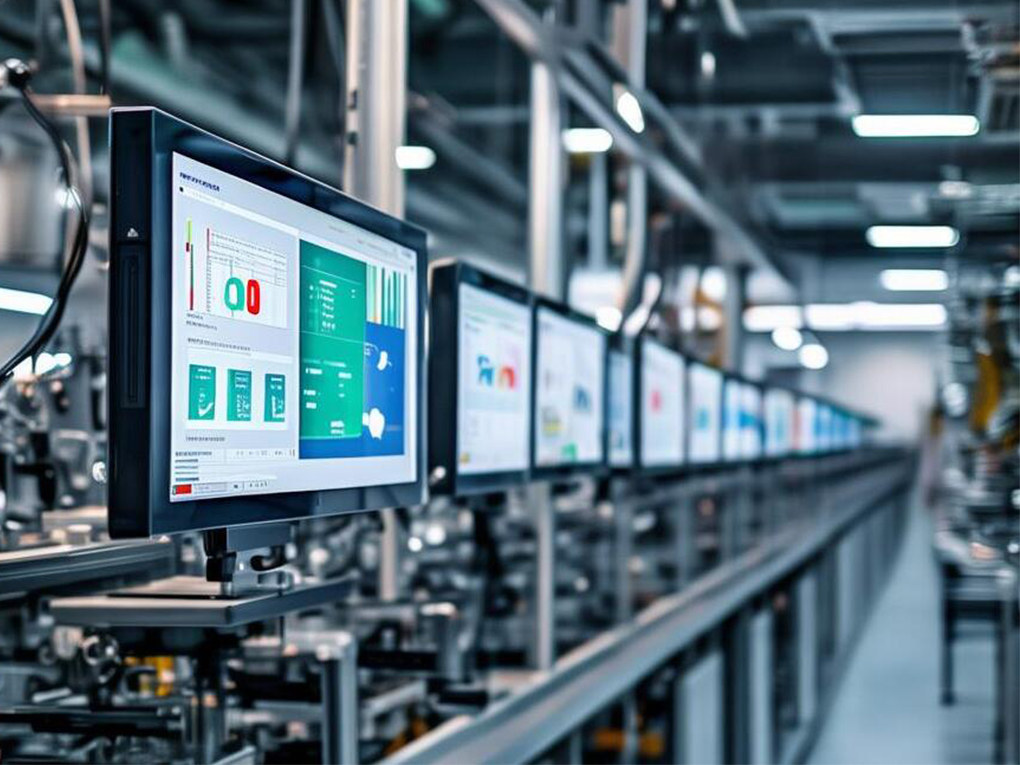
As Smart Manufacturing and Industry 4.0 evolve, the data architecture within factories is undergoing a critical transformation. Industrial touch panel PCs, acting as the primary Human-Machine Interface (HMI), must now balance legacy wired connections with modern wireless protocols. For network engineers and plant managers, achieving this equilibrium is essential for seamless IIoT integration.
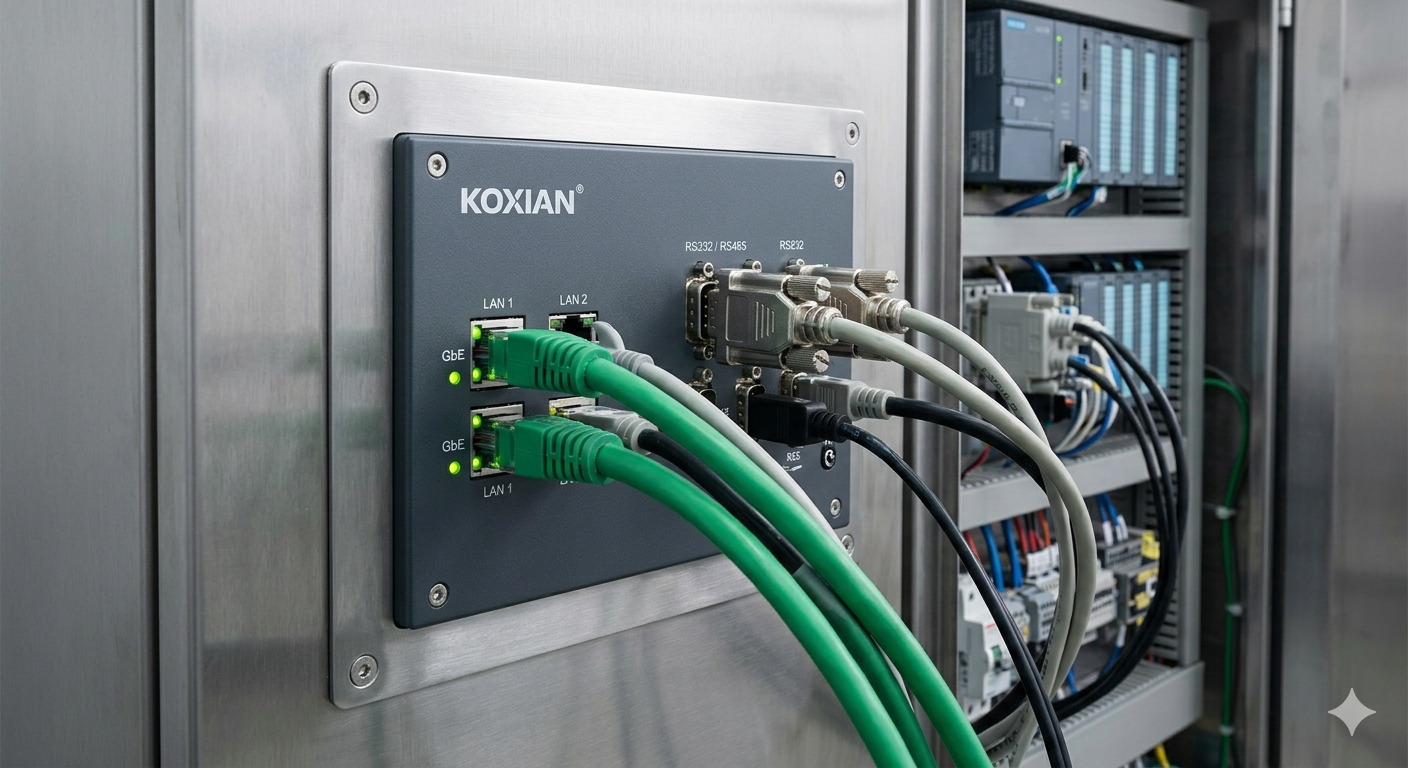
The Wired Backbone: Reliability First
Wired connectivity remains the foundation of industrial automation. Protocols like Gigabit Ethernet (GbE) and serial connections (RS232/485) are non-negotiable for real-time control and high-bandwidth data transmission. Their immunity to electromagnetic interference (EMI) ensures that critical PLC communication or MES data streams are never interrupted on a noisy production floor.
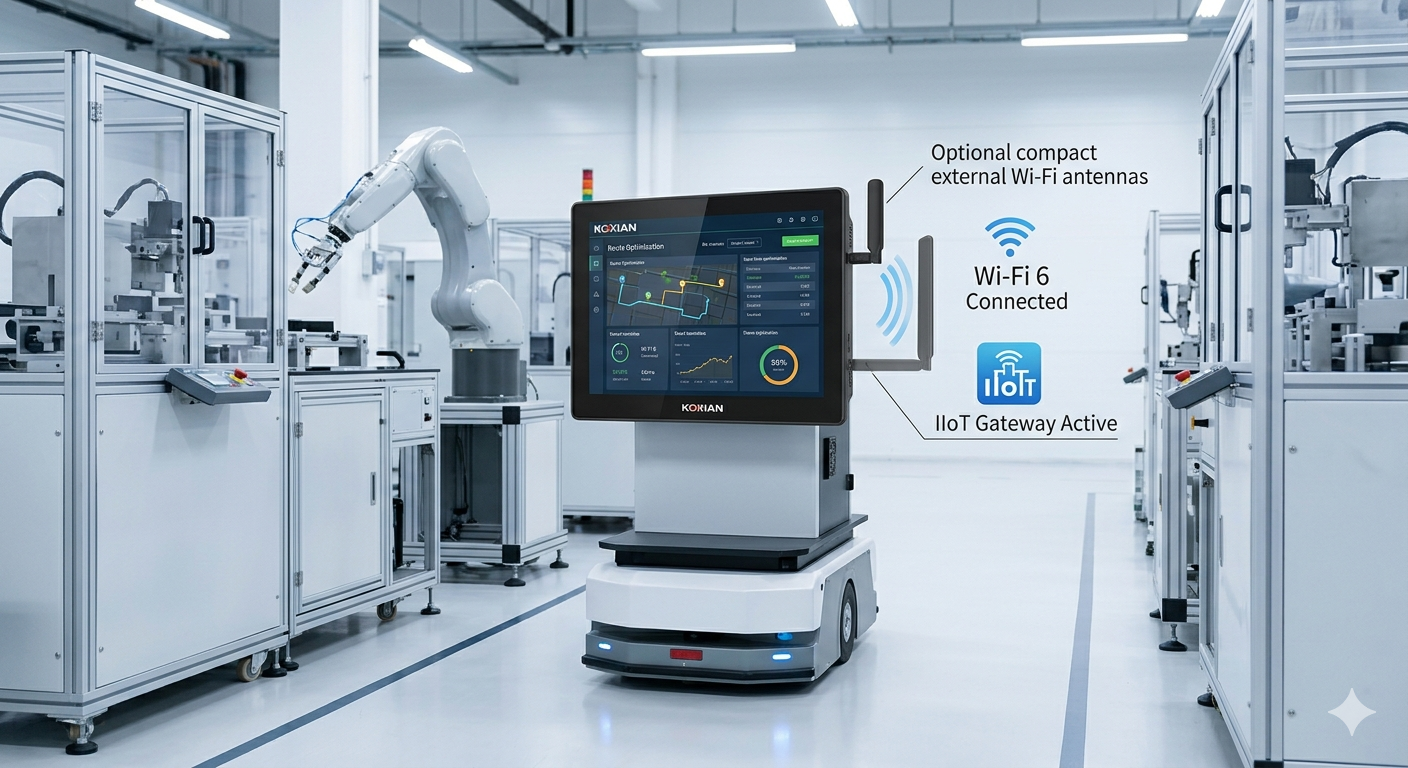
The Wireless Edge: Flexibility and Mobility
The rise of mobile robots (AGVs), handheld terminals, and remote sensors demands wireless flexibility. Wi-Fi and Bluetooth enable rapid deployment without expensive cabling and allow data collection from previously inaccessible areas. Wireless architecture is key to achieving a truly agile and scalable smart factory.
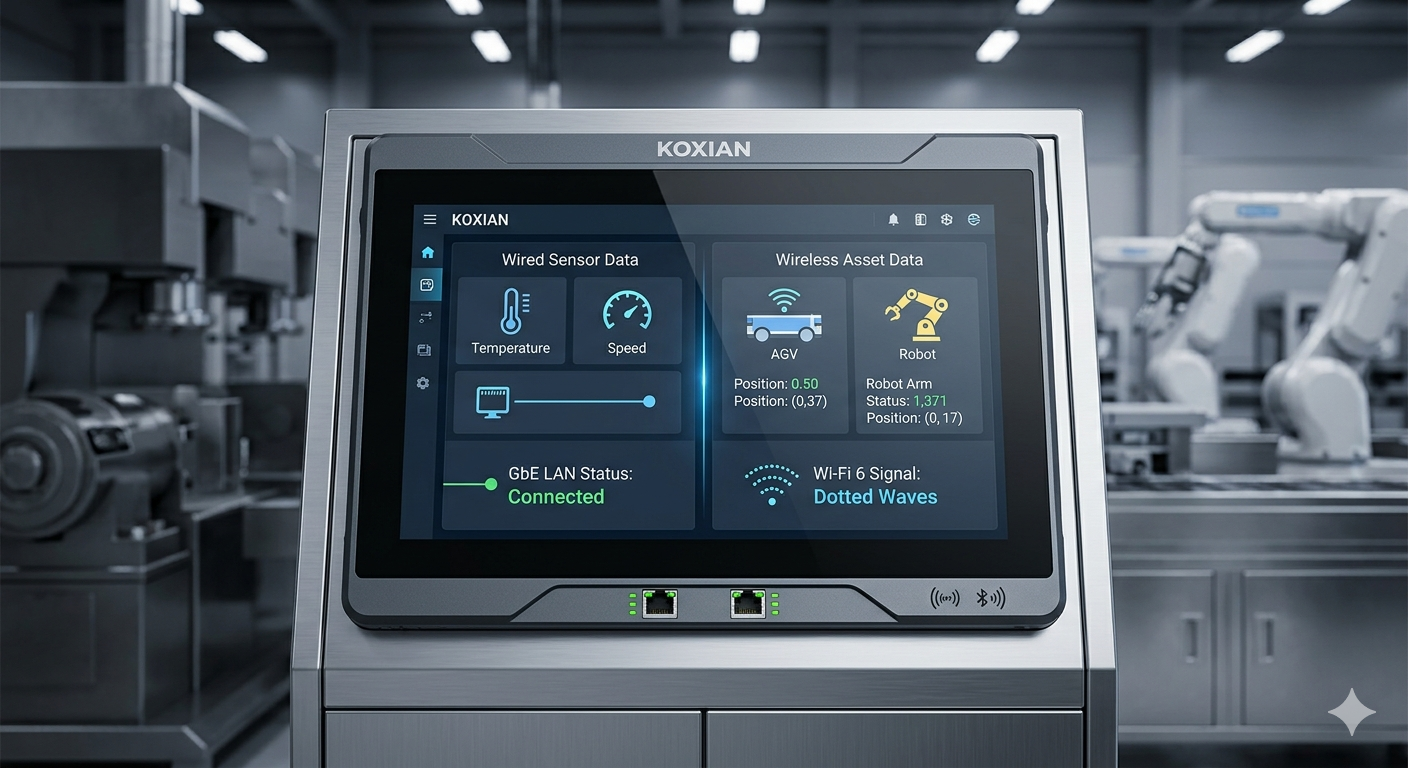
Convergence in Rugged Hardware
The challenge is no longer choosing one over the other, but selecting hardware that can manage both. Modern rugged terminals must offer a convergent solution.
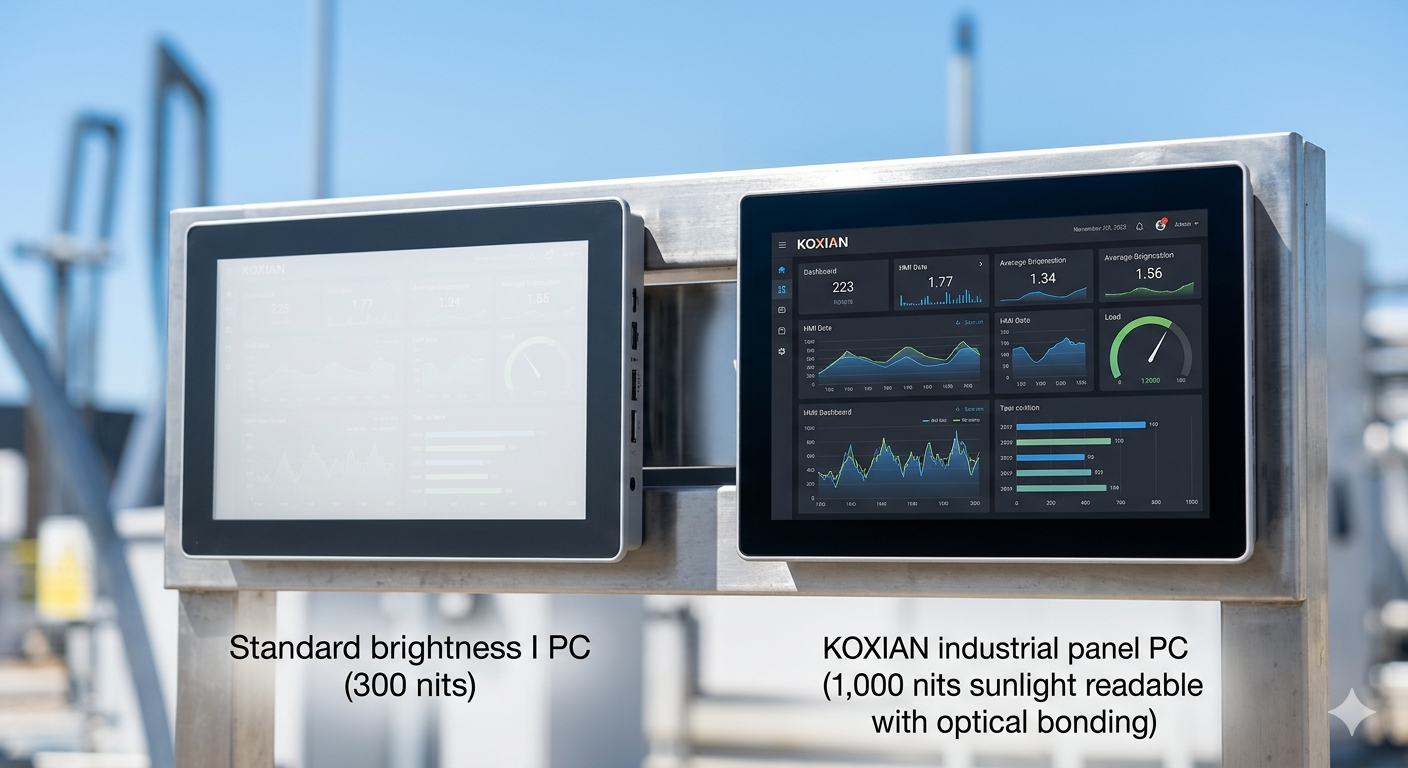
For instance, KOXIAN’s G1 series industrial panel PCs are engineered for this exact purpose. Their architecture seamlessly integrates dual Gigabit LAN and multiple professional serial ports for stable wired control, while simultaneously supporting dual-band Wi-Fi and Bluetooth modules. This allows hardware to act as a central IIoT gateway, bridging legacy machinery with cloud-based analytics.
Conclusion: Hybrid is the Future
The evolution of smart manufacturing is not about a complete wireless takeover. The future is hybrid. By deploying industrial panel PCs that intelligently balance wired reliability with wireless flexibility, manufacturers can build a robust, future-proof data network that drives efficiency and innovation.